

Lundin production test raises Norway's Barents Sea oil prospects
Swedish-owned Lundind Petroleum announce Tuesday "excellent" results from production testing at its Alta discovery in the Norwegian Barents Sea, raising hopes the country could eventually have as many as four Arctic oil hubs.
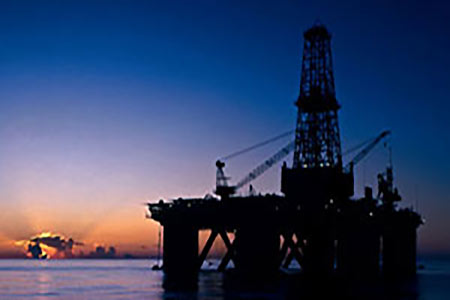
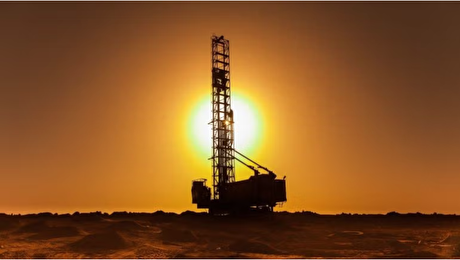
In a statement, Lundin said the two-month test on its horizontal appraisal well, penetrating karstified and fractured carbonate reservoirs, had demonstrated "excellent" productivity, with flows -- constrained by surface facilities -- reaching 18,000 b/d. In total, 675,000 barrels of oil were produced.
The company said it expected to upgrade the resource estimate for Alta early next year. The current estimate for Alta and the nearby Gohta find is 115 million-390 million barrels of oil equivalent.
"The results exceeded our expectations, demonstrating sustainable flow rates and exceptional reservoir productivity," Chief Executive and President Alex Schneiter said. "We have significantly advanced our understanding of this complex carbonate reservoir, the development of which would be a first for Norway. We will now concentrate our efforts on further defining the route to commercialization."
Oil industry expansion into the Barents Sea has been slower than some expected after a burst of enthusiasm early in the decade was followed by some disappointing drilling results, combined with constraints on infrastructure spending.
Norway currently has one producing oil field in the Barents, Goliat, which has been beset by shutdowns and criticism of the operator, Italy's Eni, by the Petroleum Safety Authority.
However, state-controlled Equinor is due to launch production from the Johan Castberg project, with recoverable resources of 450 million-650 million boe, in 2022. And Austria's OMV has plans to develop its Wisting discovery, estimated at 130 million barrels of recoverable oil, with first production penciled in for the mid-2020s.
Alta lies 50 km south of Johan Castberg, whereas Wisting is more remote, some 300 km north of the Norwegian mainland.
Schneiter said last month he was "very optimistic" about the potential of the southern Barents Sea, in an interview with S&P Global Platts.
Lundin reiterated Tuesday the development "concept" for Alta, comprising a sub-sea development connected to a standalone floating facility, and the possibility of a combined development with the smaller Gohta find.
Lundin holds a 40% stake in the license, alongside Russian-owned DEA and Japan's Idemitsu each with 30%.
Lundin is a quarter-owned by a Swedish family trust, while Equinor (previously Statoil) became its second-largest shareholder, with a 20% stake, last year.
source: Spglobal
Top News
twenty-one Minutes ago